
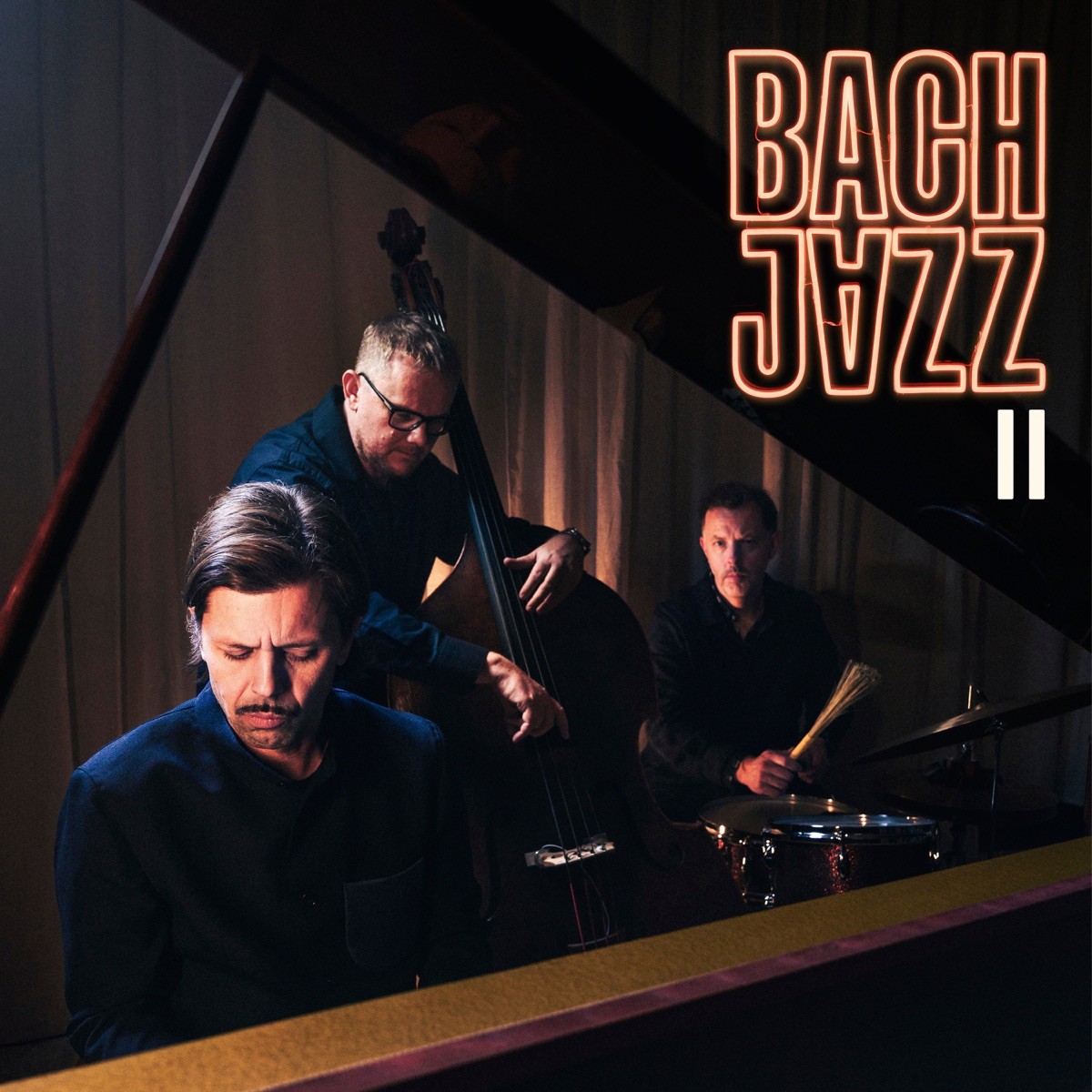
Album guide
II
- Composer
- J.S. Bach
- Released
- 2026
- Label
- Jazz By Bolero
- Forces
- Piano, Trio
- Personnel
- Emil Carlsson Rinstad, Magnus Bergström and Ola Winkler
For the 2026 sequel, the trio returned to Klangverket in Gothenburg, a former workshop, and kept the modest upright piano heard on the debut.
The half-minute “Goldberg Cassette Prelude” deliberately imitates damaged tape before the Aria begins, while “Buß und Reu” is the album’s single vocal performance.
Hear both
The classical side contains only the source pieces used on the album, in album order. The jazz side presents the complete album whenever a dependable copy can be embedded.
The classical player presents each source once: the half-minute cassette prelude and the Goldberg Aria that follows it draw on the same Aria, so one performance of it covers both tracks.
Spotify’s player is here for convenience; the full track listing below remains available to everyone.
Source works
The album’s complete track listing, with each classical source identified and original compositions marked plainly.
- Aria Variata, BWV 989Aria variata alla maniera italiana in A minor, BWV 989
- Black Pearl, BWV 988Goldberg Variations, BWV 988: Variation 25
- Sheep May Safely Graze, BWV 208Cantata ‘Was mir behagt, ist nur die muntre Jagd’, BWV 208: Sheep May Safely Graze
- Prelude X, BWV 855The Well-Tempered Clavier I, Prelude No. 10 in E minor, BWV 855
- Jesu bleibet meine Freude, BWV 147Cantata ‘Herz und Mund und Tat und Leben’, BWV 147: Jesu, Joy of Man’s Desiring
- Goldberg Cassette Prelude, BWV 988Goldberg Variations, BWV 988: Aria
- Goldberg Aria, BWV 988Goldberg Variations, BWV 988: Aria
- Fantasia Prelude, BWV 922Fantasia in A minor, BWV 922
- Nun komm der Heiden Heiland, BWV 659Chorale Prelude ‘Nun komm, der Heiden Heiland’, BWV 659
- Wachet Auf, BWV 645Chorale Prelude ‘Wachet auf, ruft uns die Stimme’, BWV 645
- Buss und Reu, BWV 244St Matthew Passion, BWV 244: ‘Buß und Reu’
- Klangverk InterludeNon-classical source
- Komm susser Tod, BWV 478‘Komm, süßer Tod’, BWV 478